The CFMOTO 450NK gives you a lot of motorcycle for the money. What it does not give you is a cockpit that knows anything about the road you are on. You get speed, revs, and gear position, and that is where the intelligence stops. Everything past that point is your eyes, your mirrors, and how much attention you have left over.
That was fine for the first few months of ownership. Then I started riding it harder through Metro Manila and taking it on longer provincial runs, and the gaps stopped being theoretical. I wanted navigation I could actually read at noon, data I could use after the ride instead of guessing at, and something paying attention to the space behind me. None of those are things a stock 450NK dash was ever going to give me.
CHIGEE AIO-6 LTE
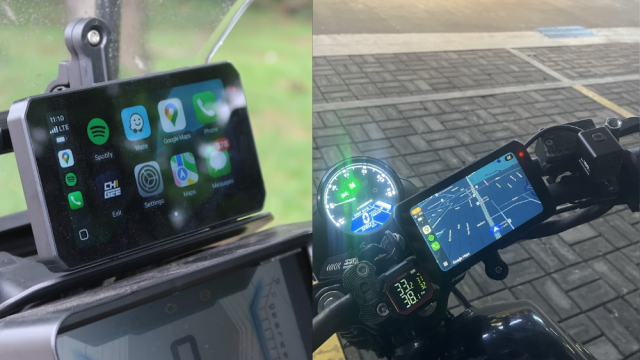
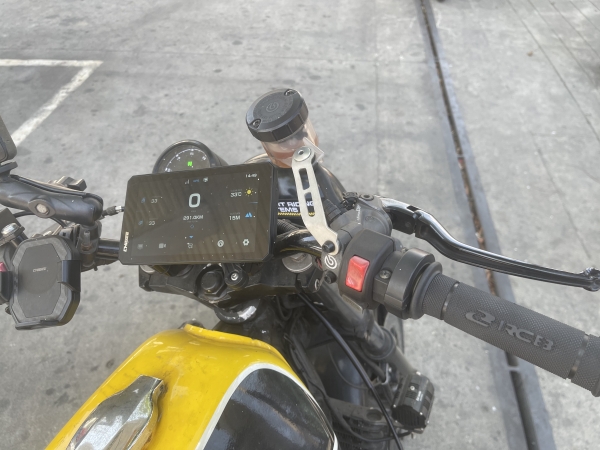
Chigee AIO-6 LTE: a 6-inch ultra-bright smart riding display with 4G connectivity, GPS tracking, SOS alerts, and seamless CarPlay/Android Auto integration.
CHIGEE SR-1
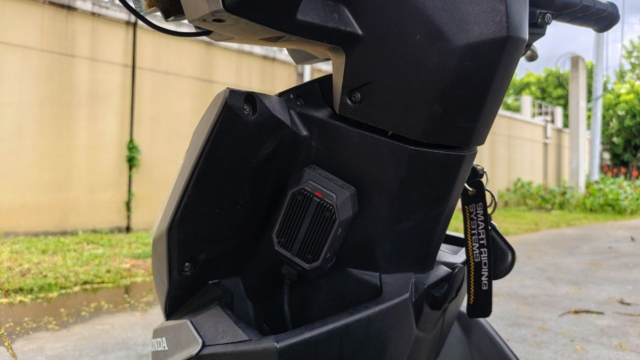
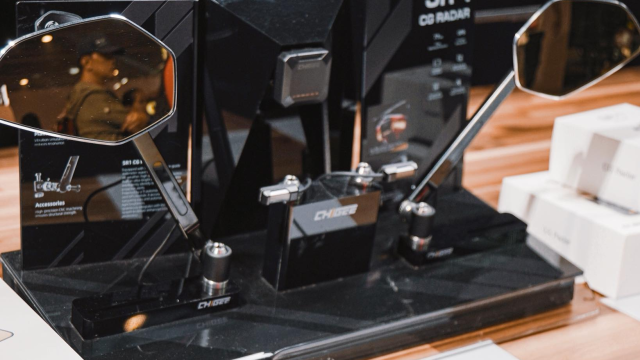
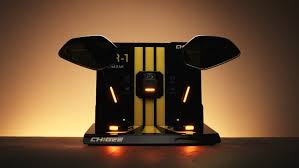
The SR-1 is an automotive-grade 77GHz millimeter-wave radar built specifically for motorcycles. It monitors the space behind you up to 70 meters out, runs four active warning modes simultaneously, and alerts both the rider and approaching drivers through integrated LED lights, all in an IP68/IP69-rated package that handles rain, dust, and long-term exposure without complaint.
CHIGEE TR100
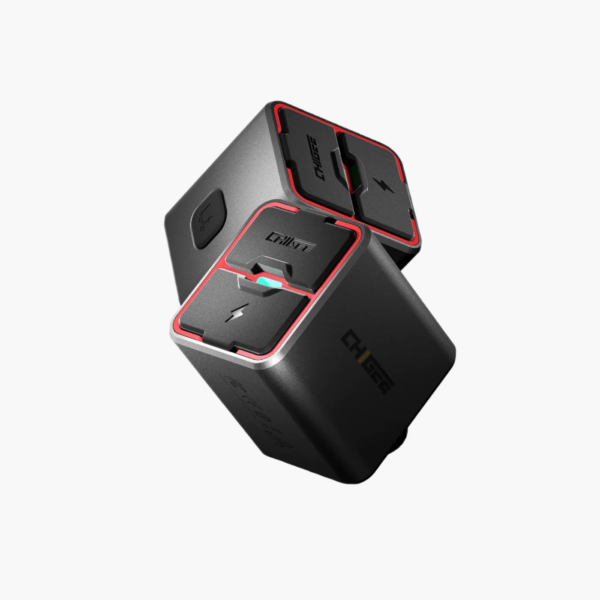
Start your engine quickly with emergency charging, even with a weak battery. The TR100 handles gadget charging and battery maintenance in one device, making it your ultimate travel companion.
CGRC Multi Wireless Controller
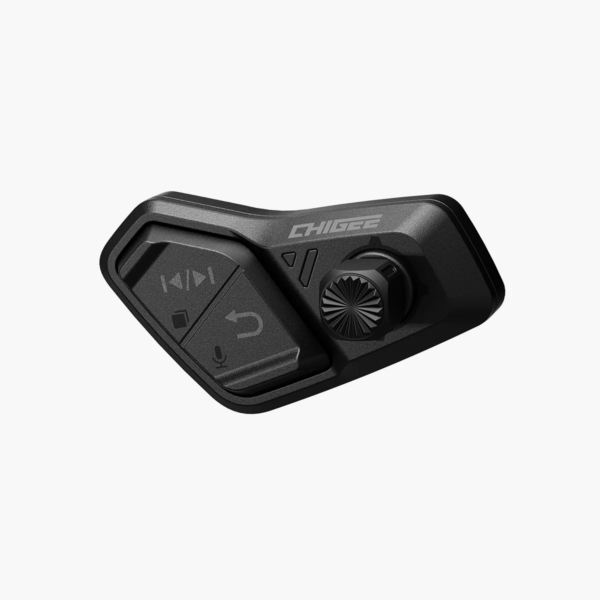
Keep music, calls, display pages, and menu controls within easy reach of your thumb. Designed for CHIGEE displays, CGRC Multi lets you handle everyday functions directly from the handlebar—without repeatedly reaching for the screen.
So I built the whole thing out with CHIGEE, one piece at a time rather than all at once. The bike now runs an AIO-6 LTE display, an SR-1 radar, a TR-100 charging hub, and the new CGRC Multi controller. Each one went on because something specific was bothering me, not because it was next in the catalogue. That order matters, because it is also the order I would recommend to anyone building the same setup.
This is what each part changed about riding the bike. It is not a rundown of what is printed on the box, and it is not a comparison of numbers you can read anywhere. Where a piece has a real limitation, I have said so. Where it fixed something, I have tried to explain what the problem actually felt like first.
Why the 450NK Needed a Smarter Cockpit
Riding here is a specific kind of chaos. Buses change lanes without checking, tricycles appear out of side streets with no warning, and other motorcycles filter past you on both sides at the same time. Mirrors do not cover that on their own, and if you run bar-end mirrors like I do, they cover even less. The trade is worth it visually, but you pay for it in rear awareness every single ride.
The phone problem is worse than most riders want to admit. By midday the screen is washed out, the heat has throttled the processor until the map stutters, and the vibration coming up through a parallel twin is quietly destroying the camera module. You are not solving the navigation problem when you clamp a phone to the bars, you are just relocating it somewhere more expensive. I have watched enough riders replace a phone over this to stop pretending it is a real solution.
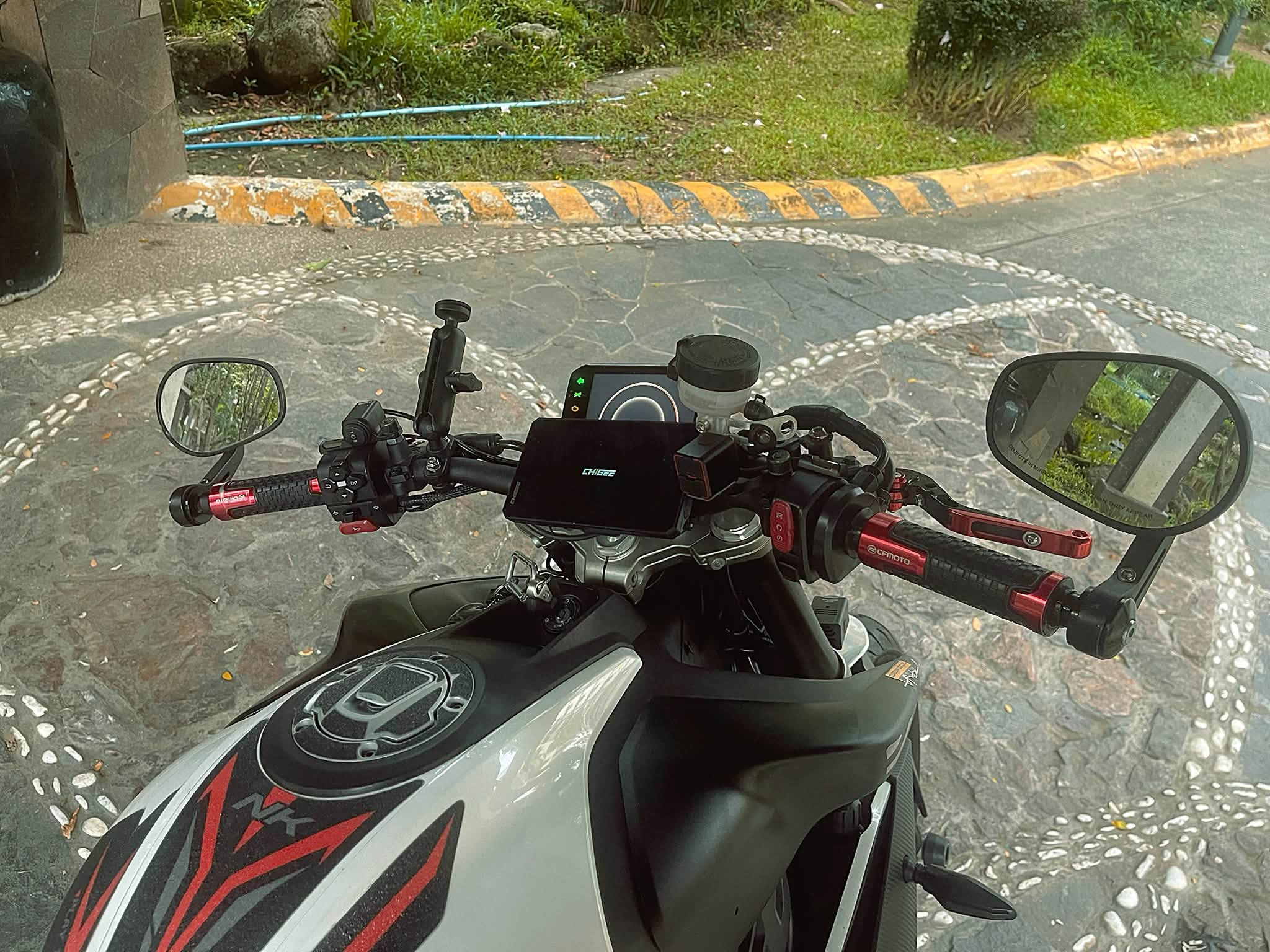
The 450NK also does not give you much room to work with. It is a naked bike with a tight cockpit and no fairing to hide anything behind, so every cable and module has to go somewhere visible or somewhere awkward. Anything I bolted on had to earn its space instead of turning the bars into a shelf. That single constraint decided almost every mounting choice on this build.
There is one more reason, and it is less about the bike than about how I use it. I shoot content, so a ride that produces no usable data afterward is a ride I have partly wasted. A stock dash tells you nothing once the engine is off, and the footage alone only ever shows what happened rather than how. That gap is what pushed me toward a display that logs the ride rather than one that just shows it.
CHIGEE AIO-6 LTE: The Command Center
The thing that changed first was not the riding, it was the two minutes before it. Tire pressure and battery voltage now sit on the home screen, so I know before I roll out of the garage whether a tire lost pressure overnight or the electrical system is unhappy. Checking that used to mean a physical gauge and a separate tester, which meant I sometimes skipped it. On roads where you genuinely do not know what you rolled over yesterday, that is not a convenience feature.
The screen itself is the reason everything else works. Under direct sun at one in the afternoon it stays legible without squinting, and the auto brightness handles the transition in and out of shade without you touching a setting. Your phone stays in your pocket, CarPlay comes up wirelessly, and gloves work on the panel well enough that mis-taps are rare. That last part sounds minor until you are trying to dismiss something at a stoplight in the rain.
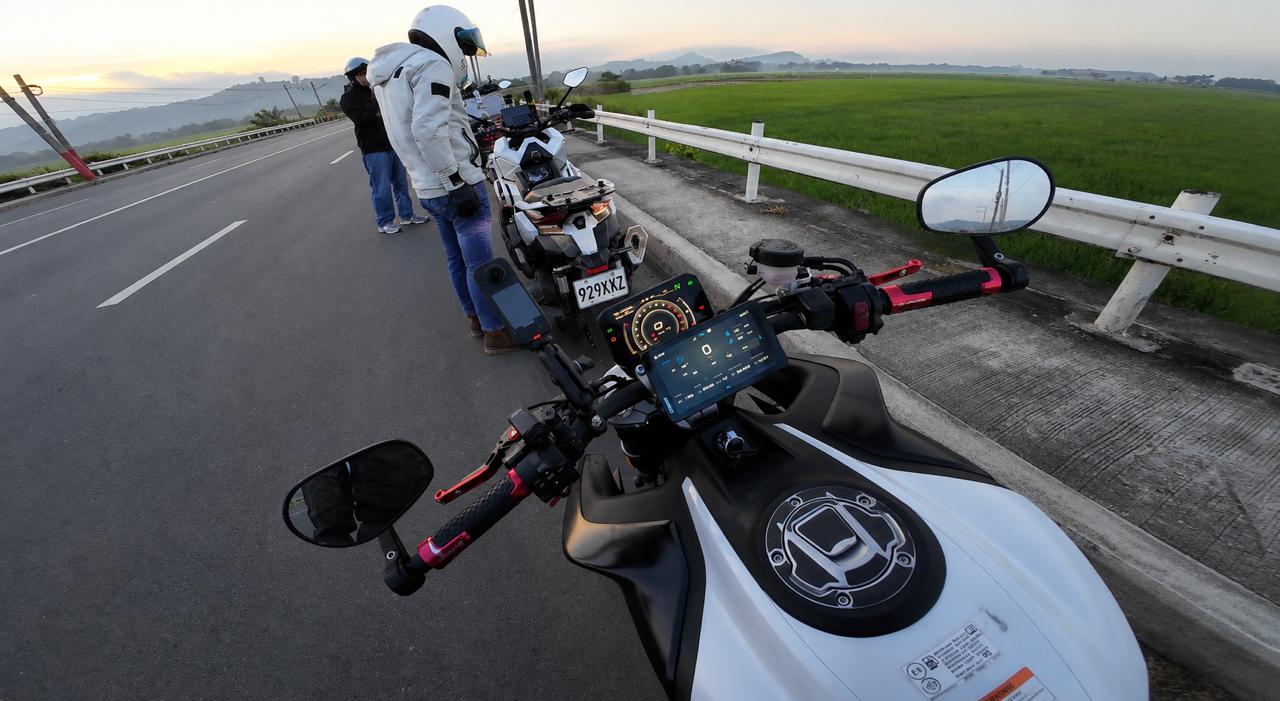
What I did not expect to use as much is the lean angle data, which is exclusive to the AIO-6 series and was the specific reason I moved up from the AIO-5 Evo. Ride the same corner a few times and the variance in that number tells you whether your lines are consistent or whether you have just been getting away with it. The goal is not to chase a bigger number, because that is how you end up in a ditch. It is a feedback loop, and after a few weekends of treating it as one I was riding noticeably cleaner.
CHIGEE AIO-6 LTE
Chigee AIO-6 LTE: a 6-inch ultra-bright smart riding display with 4G connectivity, GPS tracking, SOS alerts, and seamless CarPlay/Android Auto integration.
The LTE side is the part that matters more here than it would somewhere else. Motorcycle theft is a real concern in this country, and having live tracking, geofencing, and parking guard alerts on the bike changes how you feel about leaving it somewhere. The SIM slot takes a standard nano-SIM and I have had no issues on either Globe or Smart across Metro Manila and highway runs. I went through the whole upgrade path and what each unit solved in my CHIGEE AIO-6 LTE review.
CHIGEE SR-1: Radar for the Rest of Us
Bar-end mirrors look great and they cost you rear visibility, which is a trade I made knowingly and then spent months compensating for. More mirror checks, longer shoulder glances, more mental energy spent working out whether the car in my peripheral vision was closing or just cruising. It is manageable, and plenty of riders live with it, but it is not free. The SR-1 does not remove any of that habit, it just means something is watching that zone continuously instead of only when I remember to look.
Install took about thirty minutes working alone, which is the part people do not believe until they do it themselves. It wires to ACC, positive, and negative, then pairs through the millimeter wave radar settings inside the display, and that is genuinely the whole job. The module goes at the rear anywhere it has a clear view backward, and the warning lights go on the mirrors. The only thing worth slowing down for is cable routing, because clean routing is the difference between something that looks like it belongs on the bike and something that looks bolted on afterward.
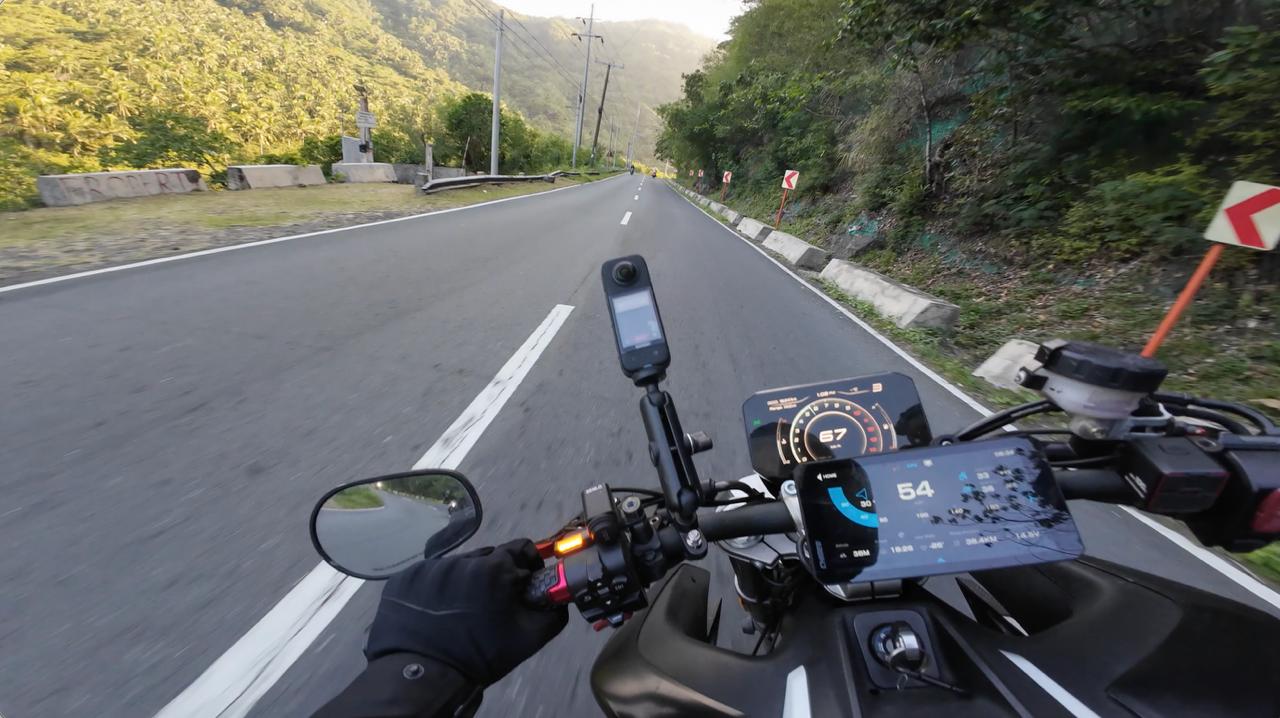
The mode that earns its keep is rear collision warning, and it does something most systems do not bother with. When it fires, the LED on the radar module flashes toward the driver behind you as well as alerting you, so a single detection handles both ends of the problem at once. I have had it trigger on C5 when a car accelerated into the space behind me, and I reacted before I had consciously worked out why. That is exactly how a rear collision alert should behave, and it is worth more than any of the numbers on the spec page.
CHIGEE SR-1
The SR-1 is an automotive-grade 77GHz millimeter-wave radar built specifically for motorcycles. It monitors the space behind you up to 70 meters out, runs four active warning modes simultaneously, and alerts both the rider and approaching drivers through integrated LED lights, all in an IP68/IP69-rated package that handles rain, dust, and long-term exposure without complaint.
There is one limitation you should know before you buy. Radar alerts will not play through a Bluetooth headset, so the audio only ever comes from the display speaker and at highway speed you are relying on the visual lights. In practice the lights are bright enough, and they dim themselves automatically at night so they do not wash out your peripheral vision. All four warning modes and how each one behaves in traffic are covered properly in my CHIGEE SR-1 review.
What Ducati Charges for This, and What I Paid
Ducati got here first and deserves the credit for it. The Multistrada V4 went into production in 2021 as the world’s first motorcycle with front and rear radar, developed together with Bosch over roughly four years. The rear unit detects vehicles sitting in your blind spot and flags traffic closing on you at speed, while the front unit runs adaptive cruise control that manages your distance to the vehicle ahead between roughly 30 and 160 kilometers per hour. The research behind it started back in 2016 with the Politecnico di Milano, so this was not a badge exercise.
Here is the honest comparison. The SR-1 does the rear half of that job and does not attempt the front half at all, because it has no way to touch your throttle or your brakes. Adaptive cruise control requires radar wired into the engine management, and no aftermarket module is going to do that on a bike it was never designed for. Anyone telling you otherwise is selling something.
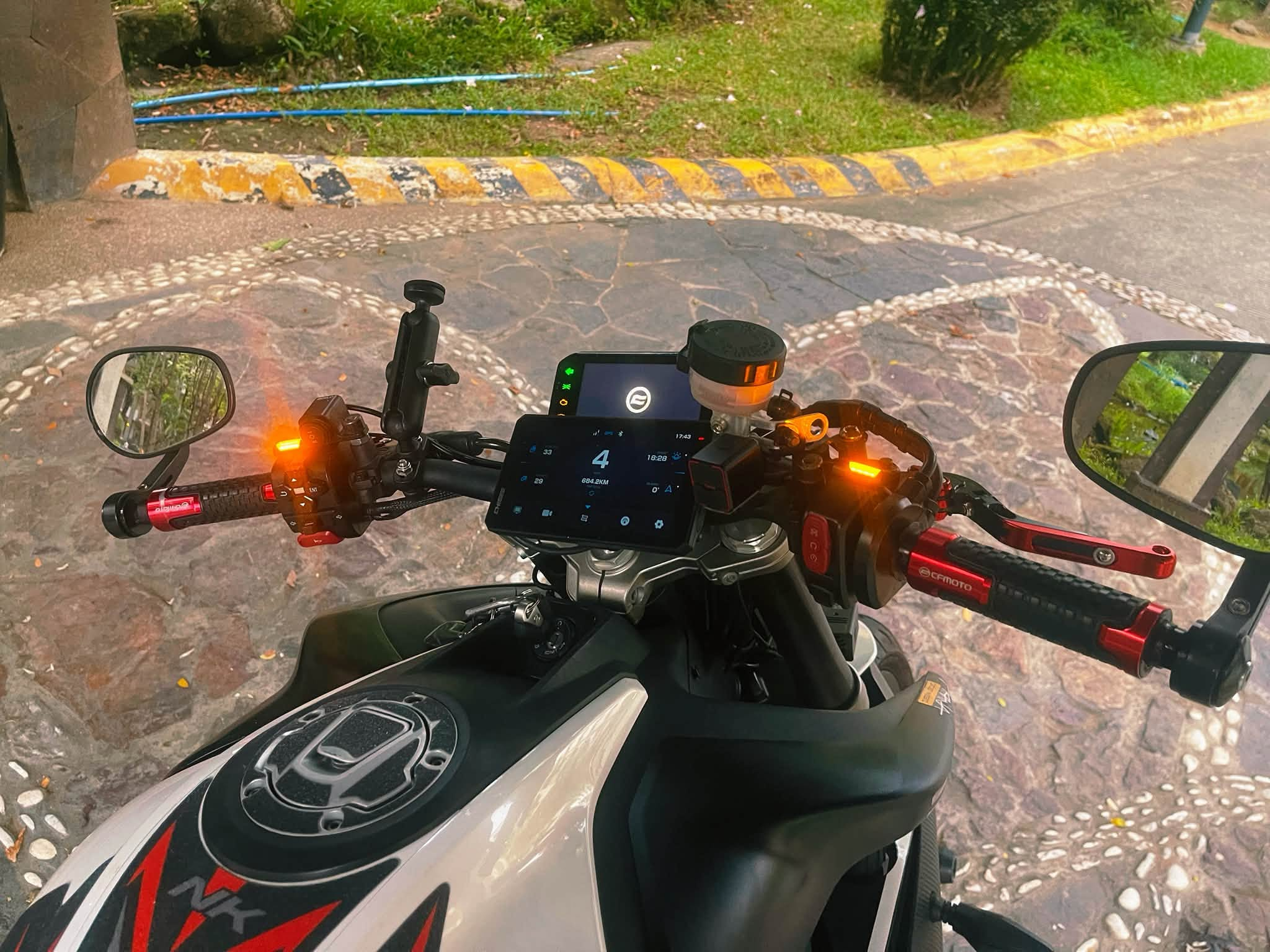
But the rear half is the half that keeps you alive in the traffic most of us actually ride in. Adaptive cruise control is a comfort feature for long motorway stretches, and it is a genuinely good one, but it is not what saves you on a congested Philippine highway. Blind spot detection and rear collision warning are the functions that matter when lane discipline is optimistic and everyone is moving at a different speed. Those are exactly the two the SR-1 delivers.
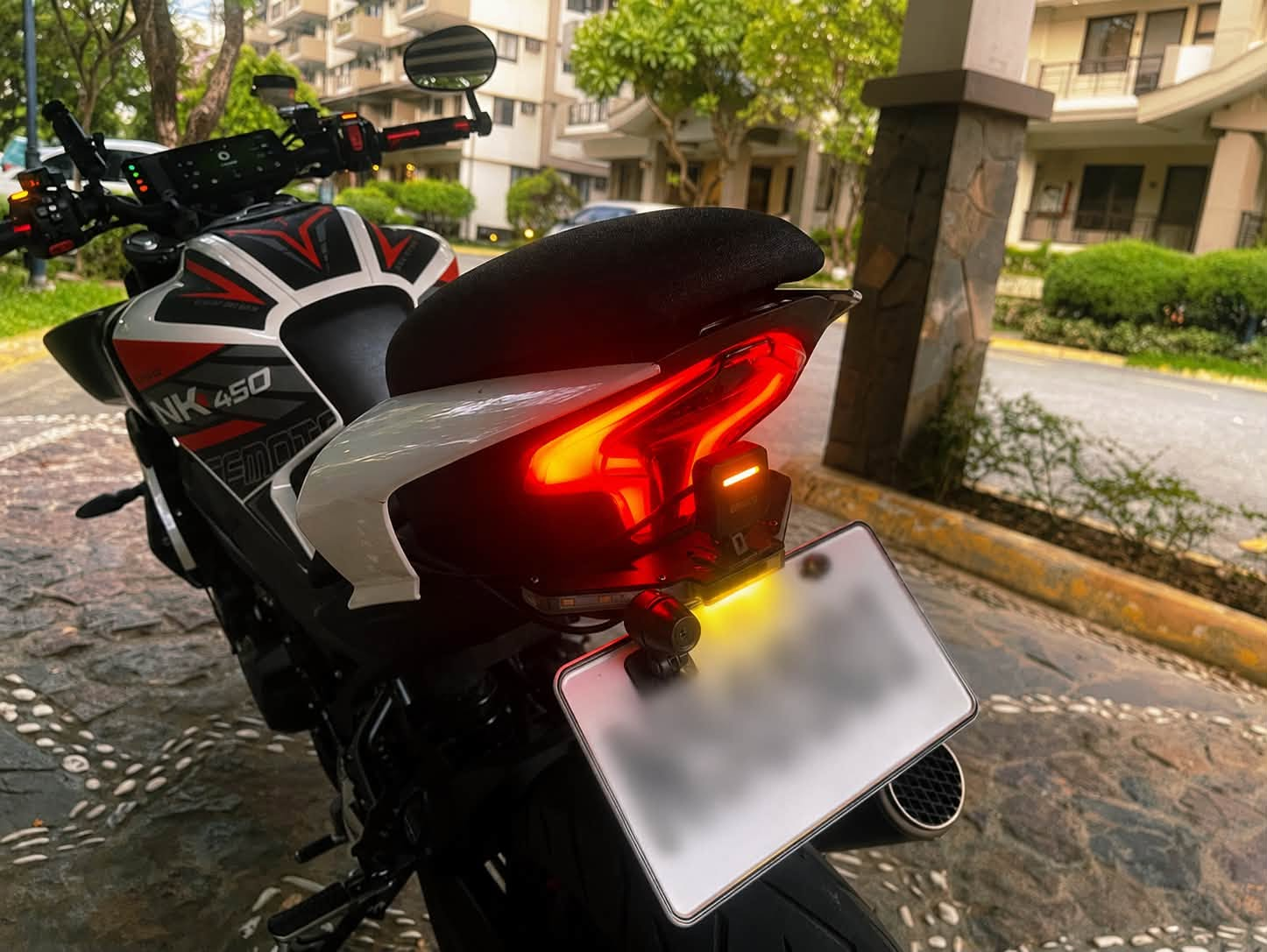
The point is not that a 450 now matches a Multistrada, because it does not and that would be a stupid claim to make. The point is that the specific safety function worth having has come unbundled from the price of the motorcycle it used to be attached to. Five years ago that technology cost you a bike in the seven figure bracket. Now it costs roughly what a good helmet costs, and it fits whatever you already own.
CHIGEE TR-100: Power You Only Notice When It Is Gone
Nobody gets excited about a charger, which is exactly why it is the piece people skip. But once a display, a radar module, a remote, and a phone are all drawing off a 450 electrical system, power stops being somebody else’s problem. A small bike has less headroom than a tourer, and the margin gets thin quicker than you would think. The TR-100 is the answer to that, and it does more than the name suggests.
It charges a phone or an action camera fast enough that a fuel stop becomes a real top up rather than a gesture. On a long day that difference is the reason you still have a camera running by the afternoon instead of a dead one in the tail bag. It also stops charging on its own when the ignition goes off, so you are not slowly draining the bike overnight. You can override that when you need to, which is occasionally useful and mostly best left alone.
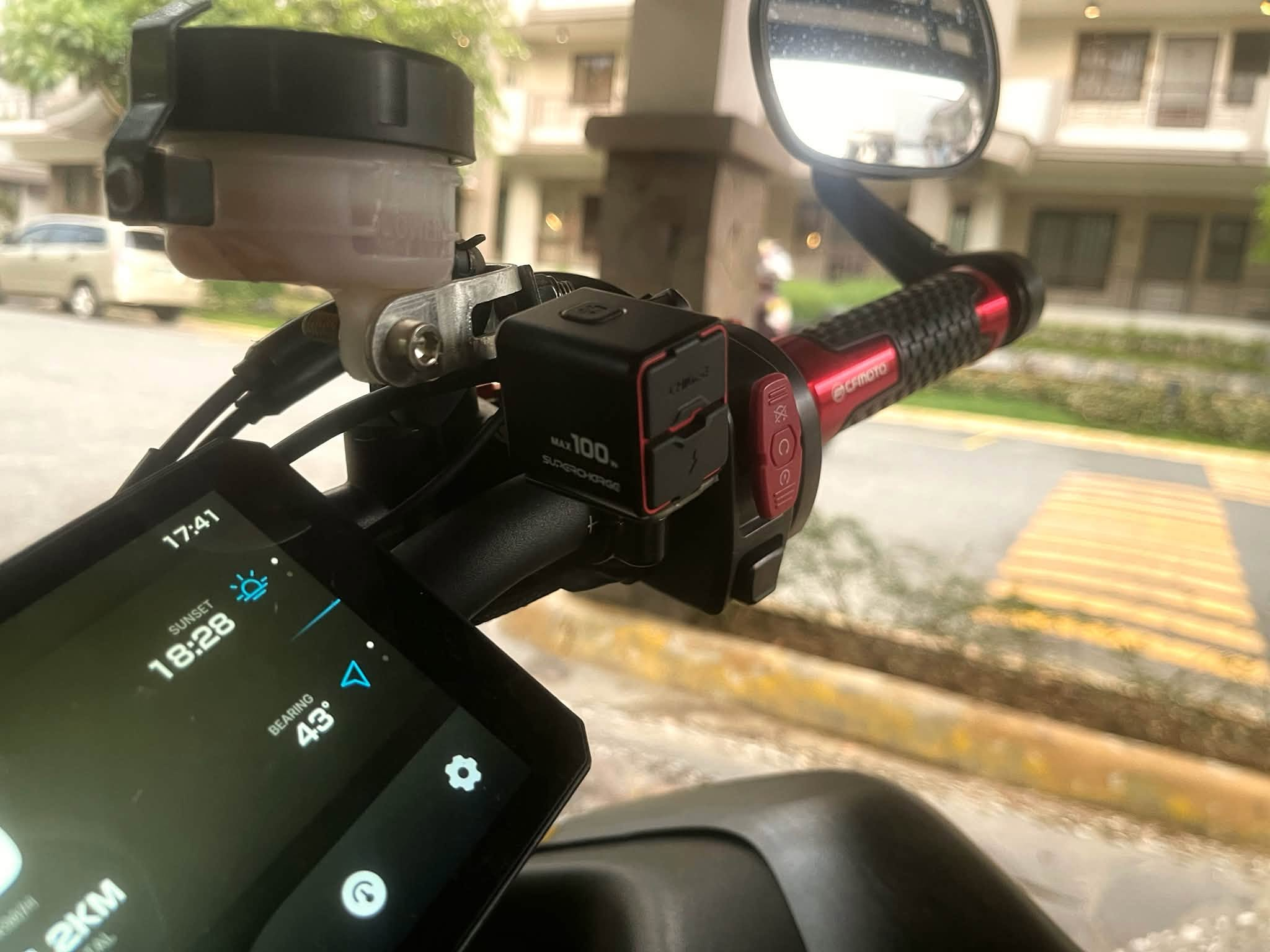
The part that justifies it is that the whole thing works in reverse. It will push charge back into a flat motorcycle battery from a power bank, which turns a dead bike from a tow into a delay of a few minutes. If you have ever stood in a gas station in Nueva Ecija at six in the morning with a bike that will not crank, you already understand exactly what that is worth. It handles the common battery types either way, so it is not fussy about what you are running.
CHIGEE TR100
Start your engine quickly with emergency charging, even with a weak battery. The TR100 handles gadget charging and battery maintenance in one device, making it your ultimate travel companion.
The one thing to get right is placement. It needs airflow and distance from engine heat, which on a bike this size realistically means under the seat, and space under the 450NK seat is not generous. Work that out before you start rather than discovering it with the seat off and half the harness already run. This is the piece most likely to make you redo your routing if you plan it last.
CGRC Multi: The Small Piece That Ties It Together
This is CHIGEE’s newest controller and it quietly replaces the CGRC Pro, so check which one you are actually buying if you are shopping around. The practical difference is the power source, since the old Pro was rechargeable and this one takes a replaceable cell with a small battery compartment you mount out of sight. Neither approach is wrong, but a replaceable cell means you are never stranded with a remote that needs charging before a ride. Everything else about it is a step forward.
The reason it earns a spot is the joystick. Instead of hunting for the right button you nudge it to move through pages and menus and press inward to confirm, which is the first time deep menu navigation has been tolerable with gloves on. Music, calls, and display pages all sit under your thumb without a hand leaving the bar. The buttons around it are mapped to what you actually reach for while moving rather than everything the display can do.
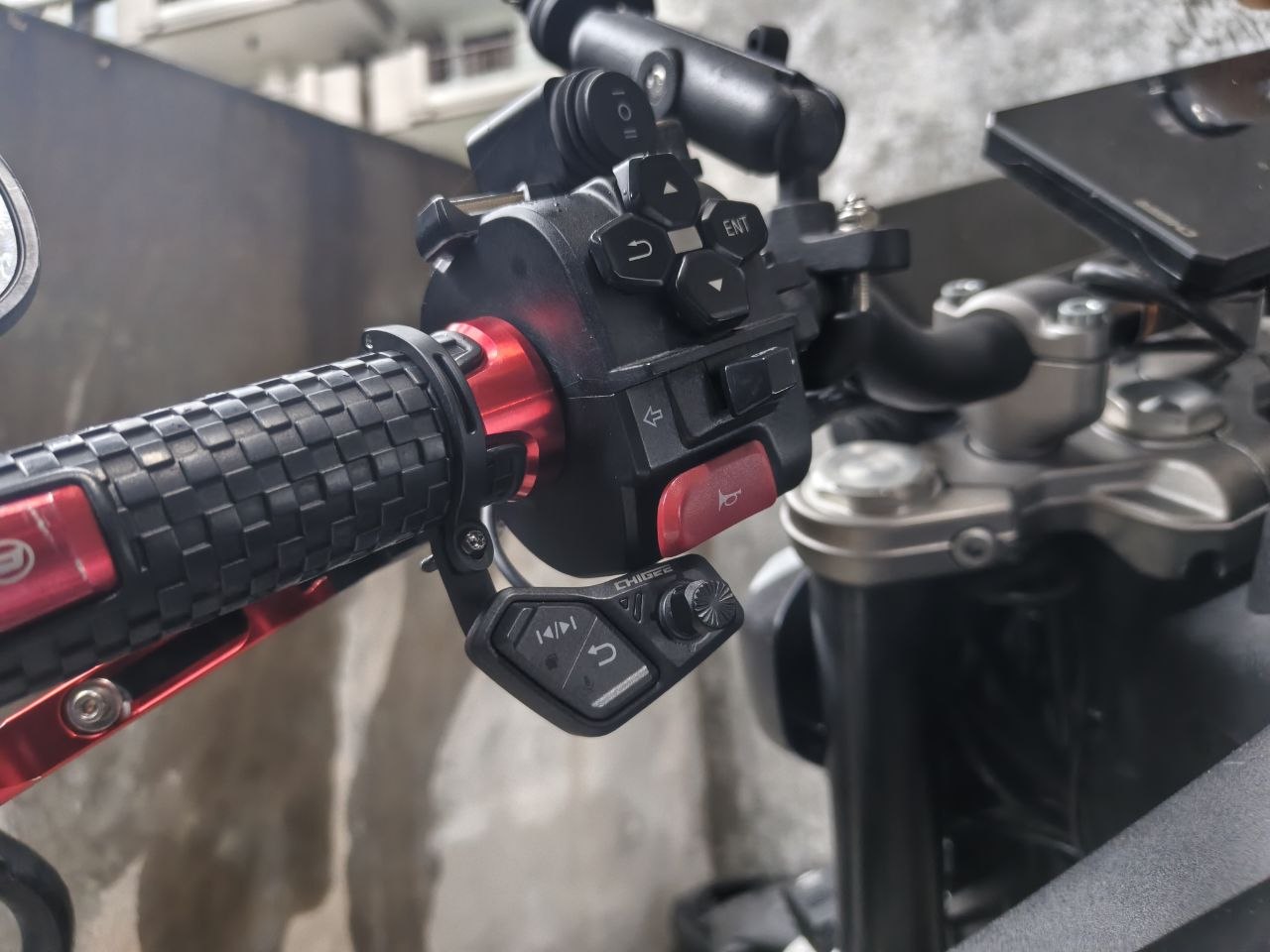
On a naked bike this matters more than it sounds. The display sits far enough forward that touching the screen at speed means committing a hand to it, which is the last thing you want mid-filter. In the rain it stops being a convenience and becomes the only sensible way to change anything at all. Wet fingers and a touchscreen are a bad combination no matter how good the panel is.
CGRC Multi Wireless Controller
Keep music, calls, display pages, and menu controls within easy reach of your thumb. Designed for CHIGEE displays, CGRC Multi lets you handle everyday functions directly from the handlebar—without repeatedly reaching for the screen.
It is also the cheapest thing on this list by a wide margin. That makes it the easiest one to talk yourself out of and the one you will use most often per peso spent. Mount it where your thumb already rests rather than where it looks tidiest, because a remote you have to reach for defeats the entire purpose. Give the battery compartment a spot that stays dry and you can forget about it for a long time.
Bottom Line
This is a lot of electronics for a mid displacement naked bike, and the total climbs faster than you expect once you get past the display. The argument for doing it anyway is that none of it is welded to the 450NK, so all of it moves to whatever I ride next. Hardware that transfers is far easier to justify than hardware that does not. That reframes the spend from an accessory for one bike into a setup you carry forward.
The safety case does not scale with engine size either. If anything it is stronger on a smaller bike, because you spend proportionally more of your time in dense traffic and less on open highway where mirrors are usually enough. Blind spot detection has been standard equipment on cars for well over a decade at this point. There is no good reason motorcycles should still be treating it as a luxury item.
CHIGEE AIO-6 LTE
Chigee AIO-6 LTE: a 6-inch ultra-bright smart riding display with 4G connectivity, GPS tracking, SOS alerts, and seamless CarPlay/Android Auto integration.
CHIGEE SR-1
The SR-1 is an automotive-grade 77GHz millimeter-wave radar built specifically for motorcycles. It monitors the space behind you up to 70 meters out, runs four active warning modes simultaneously, and alerts both the rider and approaching drivers through integrated LED lights, all in an IP68/IP69-rated package that handles rain, dust, and long-term exposure without complaint.
CHIGEE TR100
Start your engine quickly with emergency charging, even with a weak battery. The TR100 handles gadget charging and battery maintenance in one device, making it your ultimate travel companion.
CGRC Multi Wireless Controller
Keep music, calls, display pages, and menu controls within easy reach of your thumb. Designed for CHIGEE displays, CGRC Multi lets you handle everyday functions directly from the handlebar—without repeatedly reaching for the screen.
If you are buying one piece, buy the radar. It is the only item on this list that changes an outcome rather than an experience, and it works on any bike whether or not you ever add a display. The rest of it makes riding better, but the SR-1 is the one doing a job you cannot do yourself. Everything is sold separately, so the display, the charging hub, and the controller can follow whenever the budget allows.
The full build took a few weekends spread across several months rather than one heroic session in the garage. That is probably the right way to do it, because each piece changes how you use the last one and you want time to work that out. Ride safe, and check your mirrors anyway, because none of this replaces the habit. If you have questions about fitting any of it to a 450NK or another bike, leave them in the comments and I will answer what I can.